Slate vs Tile: Which Roof Suits Your Brighton Home?
Slate and tile are the two pitched-roof coverings across Brighton and Hove, and which is right depends heavily on the age and setting of your home. Slate is the premium, long-life, heritage choice; tile is the practical, lower-cost option that dominates newer stock.
Tell us the job in 30 seconds. No pushy sales, no call-out fee.
20+
Years Local
127
5★ Reviews
24/7
Emergency
10yr
Guarantee
On a period or conservation-area Brighton property, natural slate is usually the right choice — it lasts generations and matches the original. On post-war and modern homes, tile is the sensible, cost-effective option. Matching what's already there matters more than any rule of thumb.
✓ NFRC Registered
✓ Fully Insured
✓ 10 Year Guarantee
✓ Free Quotes
✓ No Hidden Costs
✓ Coastal Specialists
At a glance
Natural Slate vs Tile (Clay/Concrete): Side by Side
Slate and tile are the two pitched-roof coverings across Brighton and Hove, and which is right depends heavily on the age and setting of your home. Slate is the premium, long-life, heritage choice; tile is the practical, lower-cost option that dominates newer stock.
Neither is simply ‘better’ — each wins in different situations, and the table below sets the two side by side before we get into detail and what each means for a Brighton roof specifically.
Aspect
Natural Slate
Tile (Clay/Concrete)
Typical lifespan
80–100+ years
Clay 60–100 yrs; concrete 40–60 yrs
Installed cost (indicative)
£80–£150/m²
£50–£120/m²
Look
Fine, flat, traditional; ages beautifully
Broad range; interlocking or plain
Weight
Moderate
Concrete heavy; clay moderate
Conservation fit
Essential on many period roofs
Often not permitted on listed/period stock
Fixing
Nailed slate-by-slate, skilled
Interlocking tiles lay faster
Common failure
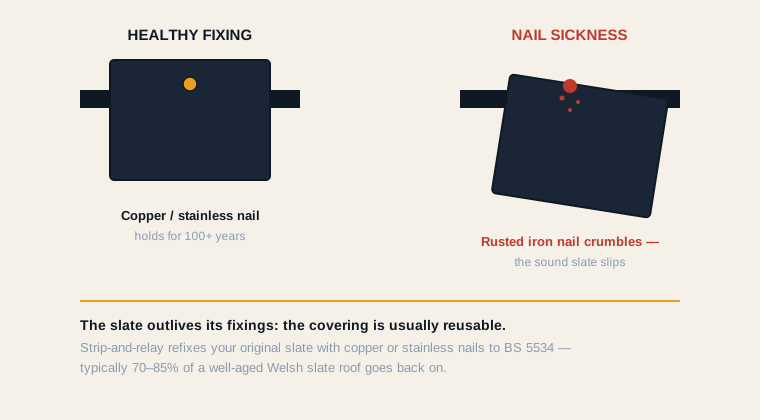
Nail fatigue — slate outlives fixings
Concrete fades/porous; tiles crack
Repair
Re-fix or strip-and-relay sound slate
Swap individual tiles easily
Natural Slate
Natural Slate
Where slate is right
Natural slate is thin, elegant and effectively permanent — a Welsh slate roof can pass 100 years. On Brighton's Victorian terraces and in conservation areas like Kemp Town and Brunswick, it's often the only covering that's appropriate, and frequently a planning requirement on listed stock. When it 'fails', it's usually the nails, not the slate — so a strip-and-relay reuses most of your original slate.
The trade-offs
It costs more in material and labour, needs skilled fixing, and matching gauge and colour on a repair is essential — a mismatched or face-fixed slate stands out badly. It's a craft job, not a quick one.
Slate as an investment
On the right property, slate is less a cost than an investment: it can outlast its owners, adds to a period home's value and kerb appeal, and — because the slate usually outlives its nails — a mid-life strip-and-relay reuses most of your original material. Over a century of roof life, slate's cost-per-year is often lower than it first appears.
Tile (Clay/Concrete)
Tile (Clay/Concrete)
Where tile is right
Tile dominates Brighton's post-war and modern homes for good reason: interlocking concrete or clay tiles lay quickly, cost less, and last decades. Clay holds its fired colour for generations; concrete is cheaper still but its pigment fades — faster in Brighton's salt air — and it's heavier.
The trade-offs
On a period or listed Brighton property, tile is often not permitted where slate was original. Concrete tiles can go porous and lose colour over time, and both clay and concrete can crack under impact, though individual tiles are easy to swap.
Getting the most from tile
If tile is right for your home, clay repays the extra over concrete in looks and longevity, while concrete rewards a tight budget. Whichever you pick, the underlay, battens and fixing matter as much as the tile — on Brighton's exposed roofs we fix to BS 5534 so the covering stays put in a Channel gale.
Honest advice
Which Is Right for You?
The deciding factor is usually your property's age and setting, not personal taste — and we'll steer you honestly.
Choose slate for a period, conservation-area or listed Brighton home, or to match an existing slate roof.
Choose clay tile for long life and fade-free colour where slate isn't required; concrete tile for the lowest cost on modern stock.
Whatever's on there now usually dictates the answer — matching the original is what keeps the roof (and any planners) happy.
Nail sickness — corroded fixings let tiles slip across a whole slope, a common re-roof trigger.
Local knowledge
Natural Slate vs Tile (Clay/Concrete) in Brighton
Brighton and Hove's roofscape splits by era: Welsh slate on the Victorian terraces and Regency stock, concrete and clay tile on the post-war estates and later builds. In conservation areas — Kemp Town, Brunswick, much of central Hove — natural slate is frequently required, and Brighton & Hove City Council will expect a sympathetic match on listed or period roofs. On any exposed Brighton roof, coastal wind means fixing to BS 5534 matters whichever covering you choose.
Brighton's mix also means many roofs have been altered over the years — a slate front and a tiled rear extension, or a period roof re-covered in concrete at some point. We survey what's actually there, factor in conservation-area rules, and recommend the covering that suits the property and, where relevant, satisfies the council.
Costs
Natural Slate vs Tile (Clay/Concrete): What It Costs in Brighton
Aspect
Natural Slate
Tile (Clay/Concrete)
Re-slate one slope (natural slate)
£2,500–£5,000
—
Re-tile one slope (concrete/clay)
—
£1,800–£3,500
Full re-roof, terraced (slate)
£6,000–£12,000+
—
Full re-roof, terraced (tile)
—
£4,500–£9,000
Individual repair
Re-fix/replace matched slate
Swap tiles
Indicative Brighton pricing; slate carries a labour premium for skilled fixing and detailing. Every quote follows a free survey. No deposit; staged payments, nothing before materials are on site.
What affects your quote
The covering itself — natural slate carries a labour premium for skilled fixing
Roof size, pitch, height and the scaffold required
Lead detailing at valleys, hips and abutments (more on slate)
Conservation or listed status dictating a specific match
Whether battens, membrane or timbers need renewing underneath
How we fit it
What to Expect When We Do the Work
Every re-roof runs the same way: a free survey of the covering and timbers, a fixed written itemised quote, scaffold, strip, any timber or batten repair, new membrane and the matched covering with traditional detailing — then a clean site and a written 10-year workmanship guarantee.
The bottom line
The Bottom Line for Brighton
On a period, conservation or listed Brighton home, slate is usually the answer — for looks, longevity and planning. On post-war and modern stock, tile is the sensible, cost-effective choice, with clay for lasting looks and concrete for budget. Whatever's on there now usually points the way; we'll survey it, factor in any conservation rules, and quote both honestly if it's a genuine choice.
FAQ
Frequently Asked Questions
Not always — it's better for period and conservation Brighton homes, where it lasts generations and matches the original. On modern stock, tile is perfectly good and far more cost-effective. The right answer is usually whatever's appropriate to the property, not simply the pricier material.
Often not, if the property is listed or in a Brighton conservation area — the council typically expects a like-for-like slate match. Even where it's allowed, swapping to tile can look wrong and may need heavier structure. We'll tell you what applies to your address.
Natural slate 80–100+ years; clay tile 60–100; concrete tile 40–60. With slate, the nails usually fail long before the slate, so a strip-and-relay can give your original slate a second long life.
Clay holds its fired colour for generations and looks traditional; concrete is cheaper and quick to lay but fades over time — faster in Brighton's salt air — and is heavier. For long-term looks, clay; for lowest cost, concrete.
Nail fatigue — the fixings corrode and let sound slates slip, often after a gale. It looks like the roof is failing, but the slate is usually fine. We can strip the slope and re-lay your original slate with new copper or stainless nails.
Yes — we identify the type, gauge and thickness and source matching Welsh, Cornish or reclaimed slate. Matching properly is essential on Brighton's period stock; we never face-fix or mix mismatched slate.
Almost always natural slate, matched to the original, with traditional lead detailing at valleys and hips. We work to what Brighton & Hove City Council expects on listed and conservation-area roofs.
On a period Brighton property, typically yes — a correctly matched natural slate roof preserves the home's character and kerb appeal, which buyers of period homes value. A mismatched or inappropriate covering can do the opposite, which is why matching the original matters.
It depends on the direction. Going from heavy concrete tile to slate is rarely a problem; going the other way, to heavier concrete, may need the structure checking. We assess the timbers at survey and tell you before you commit — never after.
The honest way is a free survey. We look at your actual Brighton roof — its size, condition, pitch, aspect and setting — and recommend the option that genuinely fits, in writing, with both costed if it's a real choice. There's no obligation to book the work, and we'd rather you chose right than chose dear.